How At-Home Health Monitoring and Telehealth Are Changing the Way Americans Manage Care
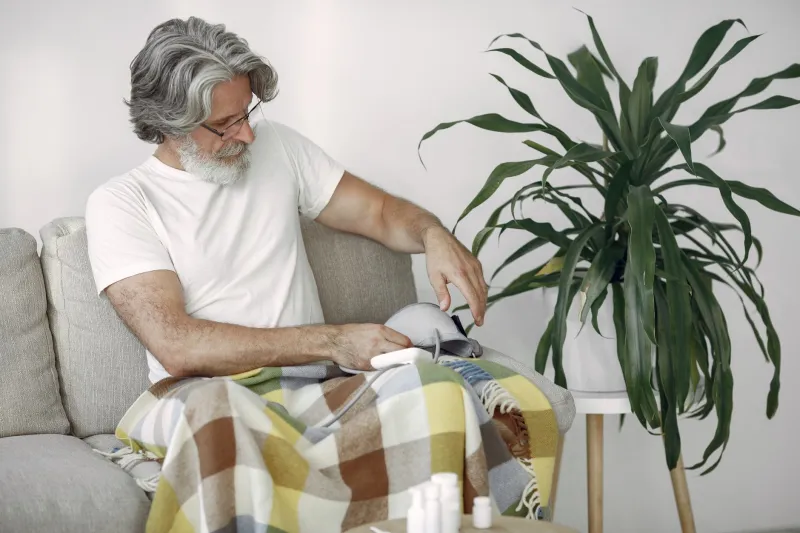
A Shift That Was Already Happening — Until It Wasn't Optional Anymore
Long before the COVID-19 pandemic normalized video doctor's appointments and curbside prescription pickup, a quiet transformation was already underway in American health care. Consumers were purchasing blood pressure cuffs, glucose monitors, and pulse oximeters in growing numbers, motivated by a desire to take a more active role in managing their own well-being. The pandemic did not create this trend — it accelerated it by roughly a decade.
Today, the question is no longer whether at-home diagnostic tools and telehealth platforms belong in your wellness routine. For a significant and growing portion of the American population, they already do. The more pressing question is how to use them well — how to integrate data from your wrist-worn heart rate monitor, your connected blood pressure cuff, and your telehealth appointments into a coherent picture of your health that your pharmacist, your primary care physician, and any specialists you see can all access and act upon.
This, frankly, is where most people fall short. The technology has advanced faster than the habits and workflows needed to make it genuinely useful.
The Devices Worth Your Investment
Not every consumer health gadget on the market earns a place in a serious home wellness toolkit. The following categories represent devices with well-established clinical utility and meaningful integration potential with the broader healthcare system.
Blood Pressure Monitors Hypertension affects nearly half of American adults, according to the Centers for Disease Control and Prevention, yet many people only have their blood pressure measured during occasional clinical visits — a setting that can itself elevate readings due to anxiety, a phenomenon known as white coat hypertension. A validated home blood pressure monitor, used consistently and correctly, provides a far more representative dataset. Look for devices validated by the American Medical Association's SMBP (Self-Measured Blood Pressure) program, and prioritize upper-arm cuffs over wrist models for greater accuracy.
Glucose Meters and Continuous Glucose Monitors (CGMs) For the roughly 38 million Americans living with diabetes and the additional 96 million with prediabetes, home glucose monitoring is not optional — it is essential. Traditional fingerstick meters remain reliable and cost-effective. Continuous glucose monitors, which track interstitial glucose levels in near real-time, are increasingly accessible and offer a level of insight that periodic testing simply cannot match.
Pulse Oximeters These devices measure blood oxygen saturation and pulse rate non-invasively, and they became household items for many Americans during the pandemic. Their utility extends beyond acute illness: individuals with chronic respiratory conditions such as asthma or COPD may benefit from regular monitoring. However, it is important to note that pulse oximeters have demonstrated accuracy limitations in individuals with darker skin tones, a concern the FDA has acknowledged and is actively working to address through updated guidance.
At-Home Diagnostic Tests Beyond chronic disease monitoring, a growing range of at-home diagnostic tests now covers everything from COVID-19 and influenza to urinary tract infections, sexually transmitted infections, and even certain cardiovascular risk markers. These tests vary considerably in their accuracy and clinical utility, and results should generally be interpreted in consultation with a healthcare provider.
Building Your Wellness Workflow
Owning the right devices is only the first step. The greater challenge — and the greater opportunity — lies in building a consistent routine around them and ensuring that the data they generate actually informs your care.
Establish a Measurement Cadence Consistency is more valuable than frequency. For blood pressure, the American Heart Association recommends measuring twice in the morning before taking medications and twice in the evening, for at least a week before sharing results with a provider. For glucose monitoring, your endocrinologist or primary care physician will guide the appropriate schedule based on your specific situation.
Document and Share Proactively Most modern monitoring devices sync with smartphone applications that log your readings automatically. Before your next telehealth appointment or in-person visit, export or screenshot a summary of recent trends — not just the most recent reading. Trends are far more informative than isolated data points. Many telehealth platforms now offer direct integrations with popular health apps, including Apple Health and Google Health Connect, which can streamline this process considerably.
Loop In Your Pharmacist This step is frequently overlooked, and it represents one of the most significant missed opportunities in consumer health management. Your pharmacist has access to your complete medication history and is trained to identify interactions, adherence patterns, and medication-related causes of abnormal readings. If your home blood pressure monitor is consistently showing elevated numbers, your pharmacist may be able to identify whether a recently added medication — an NSAID, a decongestant, or even a dietary supplement — could be contributing before you ever schedule a physician appointment.
Many pharmacy chains now offer blood pressure monitoring stations in-store and pharmacist-led hypertension management programs. Asking your pharmacist to review your home monitoring log is a straightforward, no-cost step that can meaningfully improve the quality of your care.
Navigating Data Privacy
The convenience of connected health devices comes with legitimate privacy considerations that consumers should not dismiss. Health data generated by consumer devices — as opposed to data collected in a clinical setting — is generally not protected under HIPAA. Instead, it falls under the privacy policies of the device manufacturer and the associated application, which vary widely in their protections.
Before purchasing any connected health device, review the manufacturer's data sharing policies. Key questions include: Is your health data sold to third parties? Can it be shared with insurance companies? How is data stored, and what happens to it if you delete your account? Organizations such as the Future of Privacy Forum publish consumer guidance on health data privacy that is worth consulting.
For individuals with significant privacy concerns, non-connected devices that store data locally — without cloud syncing — remain available and are entirely adequate for most home monitoring purposes.
Insurance Coverage: What Is Actually Reimbursable
Coverage for home monitoring devices varies significantly by insurer, plan type, and diagnosis. Medicare, for example, covers certain therapeutic continuous glucose monitors for qualifying beneficiaries with diabetes. Many private insurers now cover home blood pressure monitors as part of preventive care benefits, though prior authorization may be required.
The most reliable path to understanding your coverage is a direct conversation with both your insurer and your pharmacist. Your pharmacist can often identify whether a specific device is covered under your plan's durable medical equipment benefit and can assist with the documentation required for reimbursement. This is a service that most patients do not know to ask for — and that most pharmacists are well-equipped to provide.
Coordinating Across Multiple Providers
As telehealth platforms proliferate and specialist care increasingly occurs across different health systems, the risk of fragmented care grows. Your cardiologist may not know what your endocrinologist recommended last month. Your telehealth provider may not have access to the medication list your community pharmacist maintains.
The practical solution is to designate a single point of coordination — and for many Americans, the community pharmacist is ideally suited for this role. Unlike physicians, pharmacists have visibility into medications prescribed by multiple providers. They are accessible without appointments. And they are trained specifically to identify the kinds of cross-provider inconsistencies that can lead to adverse outcomes.
Bringing a printed or digital summary of your home monitoring data, your current medication list, and any recent telehealth visit notes to your next pharmacy consultation is a simple habit that can have an outsized impact on the coherence and safety of your care.
The future of personal health management is not a single app or a single device. It is a deliberate, well-organized workflow that connects the data you collect at home with the professionals best positioned to act on it. Your pharmacist is a critical — and underutilized — node in that network.