Why Your Bathroom Is the Worst Place to Store Medications — And What to Do Instead
There is a certain logic to the bathroom medicine cabinet. It is right there, visible during the morning routine, convenient during late-night ailments, and socially expected — so much so that the term "medicine cabinet" has become synonymous with bathroom storage. Yet pharmaceutical scientists and pharmacists have known for decades what most consumers have not: the bathroom is, by nearly every measurable standard, one of the worst environments in the home for preserving medication integrity.
Understanding why requires a brief look at the chemistry involved — and the practical consequences are significant enough to affect both your health outcomes and your annual household spending.
What Heat and Moisture Actually Do to Medications
Medications are chemical compounds, and like all chemical compounds, they respond to their environment. Heat accelerates the molecular reactions that cause active pharmaceutical ingredients to break down. Moisture — particularly in the form of humidity — introduces water molecules that can trigger hydrolysis, a chemical process in which water reacts with and degrades the drug molecule itself.
The average American bathroom generates substantial humidity during showers and baths. Studies have measured bathroom relative humidity spiking above 80 percent during and immediately after a shower, even in well-ventilated spaces. That figure matters because most medications are formulated and tested for storage at relative humidity levels between 30 and 50 percent. Every time someone showers, the medicine cabinet experiences a micro-climate event that manufacturers never intended their products to endure repeatedly.
Temperature compounds the problem. The United States Pharmacopeia defines "controlled room temperature" for drug storage as 68°F to 77°F, with brief excursions permitted up to 86°F. Bathrooms routinely exceed these thresholds during hot showers, and the temperature fluctuations themselves — swinging from cool ambient air to steamy post-shower conditions and back again — can be more damaging than sustained warmth alone.
The Medications Most Vulnerable to Environmental Damage
Not all drugs degrade at the same rate, but certain categories are especially sensitive to bathroom conditions.
Tablets and capsules absorb moisture readily. A tablet that has been repeatedly exposed to high humidity may appear intact while its active ingredient has partially converted to an inactive form. Capsule shells can soften, warp, or stick together, altering the release mechanism the drug was designed to deliver.
Thyroid medications, such as levothyroxine, are among the most moisture-sensitive prescriptions in common use. Pharmacists frequently field questions from patients whose thyroid levels have mysteriously shifted — and improper storage is a documented contributing factor.
Aspirin undergoes hydrolysis when exposed to moisture, breaking down into acetic acid and salicylic acid. If your aspirin bottle smells faintly of vinegar, that chemical reaction has already occurred, and the medication's effectiveness has been compromised.
Nitroglycerin tablets, used for chest pain, are exceptionally volatile and lose potency rapidly when exposed to heat, light, or moisture. For patients managing cardiovascular conditions, degraded nitroglycerin is not merely a financial inconvenience — it is a safety concern.
Topical creams and ointments can separate, change texture, or become contaminated when temperature fluctuations cause repeated condensation inside their containers.
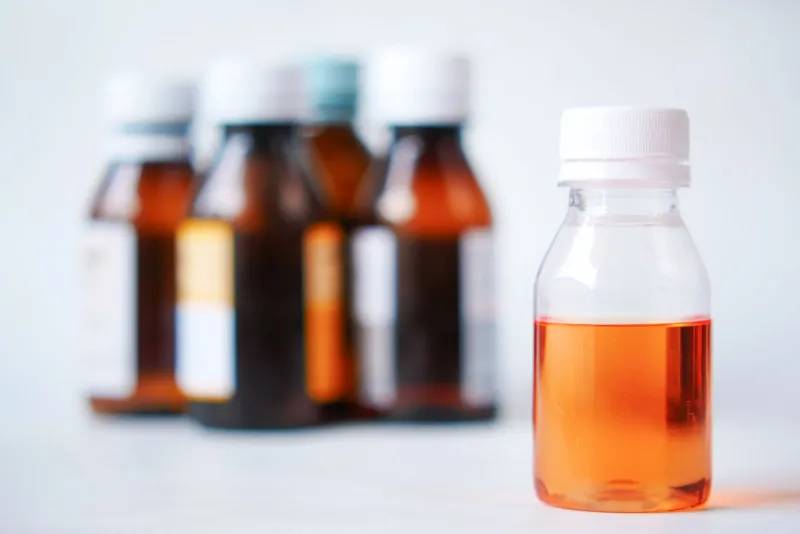
Liquid medications, including certain antibiotics reconstituted at the pharmacy, may have accelerated degradation timelines when stored in warm, humid conditions — sometimes falling below therapeutic concentrations before the labeled expiration date.
Reading the Warning Signs You May Have Missed
Drug degradation is often invisible, which makes it particularly dangerous. You cannot always see, smell, or taste the difference between a fully potent medication and one that has lost 20 or 30 percent of its active ingredient. However, there are some observable signals worth noting.
Tablets that crumble more easily than expected, capsules that have become misshapen, creams that have separated into layers, and liquids that appear cloudy when they were once clear are all potential indicators of environmental damage. A vinegar-like odor from aspirin, as noted above, is a reliable warning sign. Pills that have changed color — particularly white tablets that have yellowed — may have undergone chemical degradation.
When in doubt, consult your pharmacist. A brief phone call or a message through your pharmacy's patient portal costs nothing and can prevent you from taking a medication that is no longer delivering its intended therapeutic dose.
Practical Storage Alternatives That Do Not Require a Major Investment
The solution does not require purchasing specialty pharmaceutical storage equipment. It requires relocating medications to environments that already exist in most American homes.
A bedroom dresser drawer offers stable temperature, low humidity, and darkness — three conditions that support medication longevity. It keeps medications accessible to adults while positioning them away from young children when paired with a simple locking box or child-resistant container.
A dedicated kitchen cabinet away from the stove and sink works well for households where the kitchen is the center of daily routine. The key is distance from heat-generating appliances and moisture sources. A cabinet above the refrigerator, for instance, tends to run warm due to appliance heat and should be avoided.
A linen closet shelf in a hallway or bedroom area provides consistent temperature and low ambient humidity. This is frequently an underutilized space that requires no modification whatsoever.
A small, lidded container in any of the above locations adds a layer of protection against dust and incidental moisture without significant expense. Basic food-storage containers with tight-fitting lids serve this function adequately.
For medications that genuinely require refrigeration — certain insulins, some liquid antibiotics, specific biologics — the refrigerator remains appropriate. Store these on a middle shelf rather than the door, where temperature fluctuations from opening and closing are most pronounced.
A Note on Travel and Portability
Many people keep a small supply of daily medications in a bag or purse for convenience. This practice introduces its own set of environmental risks, as bags can reach high internal temperatures in parked vehicles during warm months. The interior of a car parked in direct summer sunlight can exceed 130°F — conditions that can destroy medication potency within hours. If you carry medications with you, keep them on your person rather than in a vehicle, and consider an insulated travel pouch for heat-sensitive drugs.
The Financial Dimension
American households spend an average of several hundred dollars annually on prescription medications, and many spend considerably more. When medications degrade prematurely due to improper storage, those dollars are effectively wasted — not in a dramatic, visible way, but gradually and silently. A prescription that should last 30 days and deliver consistent therapeutic results may instead deliver diminishing returns over its final week if potency has eroded.
Beyond the direct cost of the medications themselves, there is the downstream expense of inadequate treatment: additional physician visits to address symptoms that should have been controlled, dosage adjustments prompted by unexplained efficacy changes, and in some cases, more intensive interventions that proper medication management might have prevented.
The Takeaway
The bathroom medicine cabinet is a cultural artifact more than a sound pharmaceutical practice. Relocating your medications to a cooler, drier, more stable environment is one of the simplest, least expensive steps you can take to ensure that every dose you take is delivering the potency you are paying for. Your pharmacist can advise on the specific storage requirements printed on your prescription labels — and if those labels say "store at room temperature," it is worth remembering that the room in question was never meant to be the one with the shower.