Decoding Your Prescription: What Every Line on That Pharmacy Label Actually Means
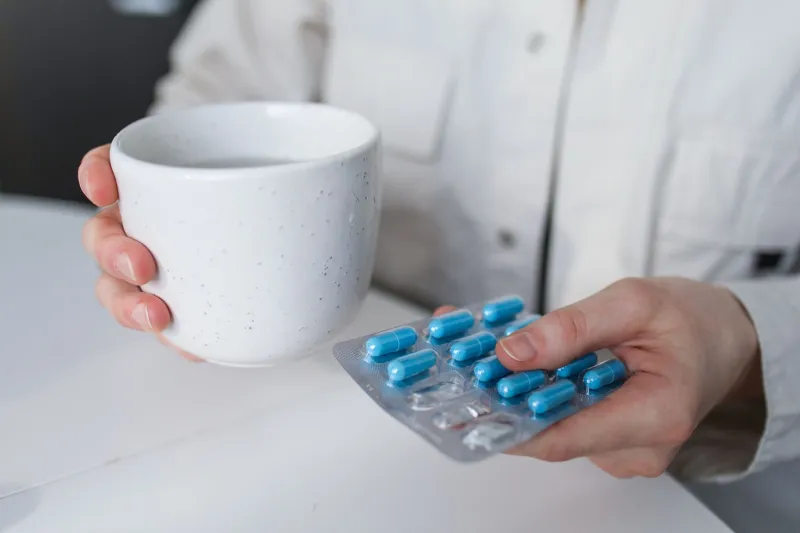
Stand in any pharmacy pickup line in America and watch what happens when people collect their prescriptions. Most accept the bag, glance briefly at the label, and move on. A few might squint at the directions. Almost none read the full label with the attention it deserves — and that gap between what the label communicates and what patients actually absorb is one of the quieter patient safety challenges in American healthcare.
Your pharmacy label is not bureaucratic boilerplate. It is a compressed, carefully structured document that carries instructions, warnings, and clinical context — all of it relevant to whether the medication works as intended and whether you remain safe while taking it. Learning to read it the way a pharmacist would is not a technical skill reserved for healthcare professionals. It is practical home health literacy, and it begins with understanding exactly what each element of that label is telling you.
The Anatomy of a Pharmacy Label
A standard US pharmacy label contains several distinct sections, each serving a specific purpose. Familiarizing yourself with their function transforms the label from a confusing block of text into a readable clinical document.
Patient and prescriber information appears at the top of most labels. This section confirms that the medication was dispensed for you specifically and identifies the prescribing provider. If either name is incorrect, stop and notify the pharmacist immediately — dispensing errors, while uncommon, do occur, and this is your first line of verification.
The drug name and strength follow, and this is where many patients encounter their first point of confusion: the name on the bottle may not match what the doctor said was being prescribed. If your physician prescribed Lipitor but the label reads atorvastatin 20 mg, your pharmacist has dispensed the generic equivalent. Generic medications contain the same active ingredient at the same strength and are required by the FDA to meet rigorous bioequivalence standards. The difference lies in inactive ingredients — binders, fillers, dyes, and coatings — which we will address shortly.
Directions for use are often more nuanced than they appear. "Take once daily" sounds straightforward, but when — morning or evening — can matter significantly for certain drug classes. Medications for blood pressure, cholesterol, and thyroid function, for instance, may have timing recommendations tied to their mechanism of action or to food interactions. If the label simply says "once daily" without specifying a time, that is a question worth raising with your pharmacist.
The quantity and refill information section tells you how many doses were dispensed and how many authorized refills remain. Pay attention to the expiration date printed here as well. Contrary to popular belief, the date on your prescription bottle is not always the manufacturer's stability date — it is often a one-year dispensing date assigned by the pharmacy. For some medications, particularly liquids and compounded preparations, this distinction matters.
Auxiliary Labels: The Colored Stickers That Deserve Serious Attention
Those small, brightly colored stickers affixed alongside your main label are called auxiliary warning labels, and they are among the most clinically significant elements on the entire package — yet they are frequently peeled off and discarded without being read.
Common auxiliary labels include warnings such as:
- May cause drowsiness. Use care when operating a vehicle or machinery.
- Take with food or milk.
- Avoid prolonged exposure to sunlight.
- Do not drink alcoholic beverages while taking this medication.
- Grapefruit and grapefruit juice should not be taken with this medication.
Each of these reflects a documented pharmacological concern. The grapefruit warning, for example, is not a conservative suggestion — it addresses a genuine enzymatic interaction that can cause certain drug concentrations to reach dangerous levels in the bloodstream. The food instruction on some medications is not about comfort; it is about absorption. Taking certain antibiotics with food can reduce their effectiveness, while taking others without food can cause gastrointestinal injury.
Pharmacists select these stickers based on the specific drug dispensed and the most clinically relevant risks associated with it. Treating them as decoration is a mistake.
Understanding Black Box Warnings
The most serious safety alerts in US pharmaceutical labeling are called black box warnings — named for the thick black border that surrounds them in official prescribing documentation. These warnings are mandated by the FDA and represent the highest level of caution the agency can require short of removing a drug from the market.
Black box warnings address risks that are serious, life-threatening, or irreversible. They may flag elevated risks of suicidal ideation in younger patients taking certain antidepressants, increased cardiovascular risk associated with specific anti-inflammatory drugs, or the potential for severe liver damage with certain medications.
You will not typically see the full black box warning reproduced on your pharmacy label — space constraints make that impractical. However, pharmacists are required to provide a medication guide for drugs carrying these warnings, and you should receive one with your dispensed medication. If you have not received a medication guide for a drug you know carries a black box warning, ask for one explicitly.
Knowing that your medication carries a black box warning does not mean you should stop taking it. It means you should understand the risk, know which symptoms to watch for, and maintain open communication with your prescribing physician.
The Inactive Ingredient Question
For most patients, the distinction between a drug's active and inactive ingredients never crosses their mind. For patients with allergies, sensitivities, or specific dietary requirements, it can be critically important.
Inactive ingredients — also called excipients — include everything in a tablet or capsule that is not the therapeutic compound itself: fillers, binders, lubricants, colorants, and coatings. While these ingredients are generally regarded as safe, they are not universally inert. Certain dyes, such as FD&C Yellow No. 5 (tartrazine), can trigger reactions in sensitive individuals. Lactose, used as a filler in many tablets, is problematic for patients with severe lactose intolerance. Some gelatin capsules are not suitable for patients observing vegetarian or halal dietary practices.
Generic formulations of the same drug may use different inactive ingredients than the brand-name version, which is why a small subset of patients report tolerating one formulation better than another. If you notice a change in how your body responds after a generic substitution, that observation is worth discussing with your pharmacist — it is not imagined, and it has a pharmacological basis.
The FDA's online Inactive Ingredient Database allows consumers to search for specific excipients by drug, though navigating it requires some patience. Your pharmacist can also access detailed formulation information and help you identify alternatives if a specific ingredient is a concern.
Storage Instructions: The Overlooked Detail
The storage instructions on your medication label are not suggestions. They are stability requirements derived from the manufacturer's testing data, and departing significantly from them can degrade the medication's potency or, in some cases, alter its chemical composition.
"Store at room temperature" typically means between 68°F and 77°F — not in a bathroom medicine cabinet, where heat and humidity fluctuate considerably, and not in a car glove compartment, where summer temperatures can exceed 130°F. "Refrigerate" means maintaining a temperature between 36°F and 46°F; freezing a refrigerated medication can be just as damaging as leaving it at room temperature.
Some medications — certain insulin formulations, specific liquid antibiotics, and some biologics — have strict cold chain requirements. If your medication requires refrigeration and you are traveling, this is a detail that warrants advance planning.
When to Call Your Pharmacist
Certain observations should prompt an immediate call to your pharmacy rather than a wait-and-see approach:
- The medication looks different from what you received previously (different color, shape, markings, or smell)
- The label instructions conflict with what your physician told you verbally
- You are starting a new medication and have not been asked about your current medication and supplement list
- You cannot locate a medication guide for a drug you believe carries a black box warning
- You have a known allergy or dietary restriction and have not confirmed the inactive ingredient profile of your dispensed medication
Your pharmacist is among the most accessible clinical professionals in the American healthcare system, and medication label questions fall squarely within their area of expertise. A two-minute phone call can resolve ambiguities that, left unaddressed, might lead to avoidable complications.
Taking Ownership of Your Medication Knowledge
Becoming a more informed medication consumer does not require a clinical degree. It requires attention, the willingness to ask questions, and the understanding that every element of your pharmacy label was placed there deliberately by professionals who understood its importance.
At Home & Pharmacy, we believe that the space between the pharmacy counter and your medicine cabinet is where informed healthcare decisions are made. The label on your prescription bottle is one of the most direct channels through which the healthcare system communicates with you. Reading it carefully — all of it — is one of the simplest and most consequential things you can do for your health.