Your Climate Is Quietly Destroying Your Medications — Even in Rooms That Seem Safe
You moved your prescriptions out of the bathroom. You stopped leaving ibuprofen on the kitchen counter. By most conventional wisdom, you have done everything right. Yet there is a reasonable chance that the medications stored carefully in your bedroom dresser, your hallway closet, or your living room cabinet are degrading faster than they should — not because of negligence, but because of forces most households never think to monitor.
Temperature and humidity are the silent adversaries of medication stability. Understanding how they operate inside a typical American home, across seasons and rooms, is one of the more underappreciated aspects of responsible home health management.
Why Drugs Are More Fragile Than They Look
Pharmaceutical manufacturers test their products under controlled storage conditions and assign expiration dates accordingly. The U.S. Pharmacopeia defines "controlled room temperature" as a mean kinetic temperature of 77°F (25°C), with excursions permitted between 59°F and 86°F (15°C to 30°C). That sounds like a wide margin — and in a laboratory, it is. Inside a real home, however, maintaining those parameters consistently is harder than most people realize.
Heat accelerates the chemical reactions that cause active pharmaceutical ingredients to break down. Humidity introduces moisture that can hydrolyze certain compounds, cause tablets to clump, and degrade capsule shells. Light compounds the problem by triggering photochemical degradation. These forces rarely act alone; they compound one another in ways that can render a medication significantly less potent — or, in rare cases, produce harmful byproducts — well before the printed expiration date.
The Rooms You Think Are Safe — And Why They May Not Be
Bedroom Dressers and Nightstands
The bedroom is the most common alternative storage location once people abandon the bathroom medicine cabinet. It feels logical: the room is climate-controlled, relatively dark, and private. But bedrooms adjacent to exterior walls can experience meaningful temperature fluctuations, particularly during winter in northern states or summer in the Sun Belt. A nightstand positioned against an exterior wall in Minneapolis in January or Phoenix in August may be subjected to temperatures well outside the recommended range, depending on insulation quality.
Additionally, the area directly beneath a window — a common nightstand placement — receives radiant heat from sunlight even when the ambient room temperature seems comfortable. A surface thermometer placed on a sun-exposed nightstand on a clear afternoon can register temperatures 10 to 20 degrees higher than the room thermostat reading.
Hallway Closets and Linen Closets
Interior closets are often recommended as storage alternatives because they avoid direct sunlight and tend to remain at stable temperatures. This guidance holds in many homes — but not universally. Closets located near the home's mechanical systems, including water heaters, furnaces, or HVAC air handlers, can experience elevated ambient temperatures that fluctuate with heating and cooling cycles. A closet sharing a wall with a utility room is not the neutral environment it appears to be.
Linen closets also accumulate humidity from adjacent bathrooms, particularly in homes where bathroom exhaust fans are undersized or rarely used. If you can smell moisture when you open a closet near a bathroom, the relative humidity in that space is almost certainly higher than ideal.
Kitchen Cabinets — Beyond the Obvious Risks
Most health guidance warns against storing medications near the stove or sink. The subtler risk involves cabinets positioned above refrigerators, which generate heat from their compressor coils, and cabinets along exterior kitchen walls, which absorb thermal energy from outside. In older homes with limited insulation, a cabinet on a south-facing kitchen wall can become a genuine heat trap during summer months.
The Garage and the Car
These deserve mention because a surprising number of Americans store backup medications — particularly those used for chronic conditions — in vehicles or garage storage areas. Both environments are categorically unsuitable. Vehicle interiors can exceed 130°F on a hot day. Garages in most U.S. climates cycle through temperature extremes that no pharmaceutical manufacturer would endorse. If you keep a spare inhaler, epinephrine auto-injector, or any chronic disease medication in your car for convenience, the risk of compromised potency is real and potentially serious.
How HVAC Placement Creates Microclimates You Cannot Feel
Forced-air heating and cooling systems create airflow patterns that establish distinct microclimates throughout a home. Supply vents push conditioned air into rooms; return vents pull it back. Areas near supply vents experience rapid temperature changes as the system cycles. Shelving or storage areas in the direct path of a vent — even an overhead vent — are exposed to repeated thermal fluctuation that, over weeks and months, adds up to meaningful stress on stored medications.
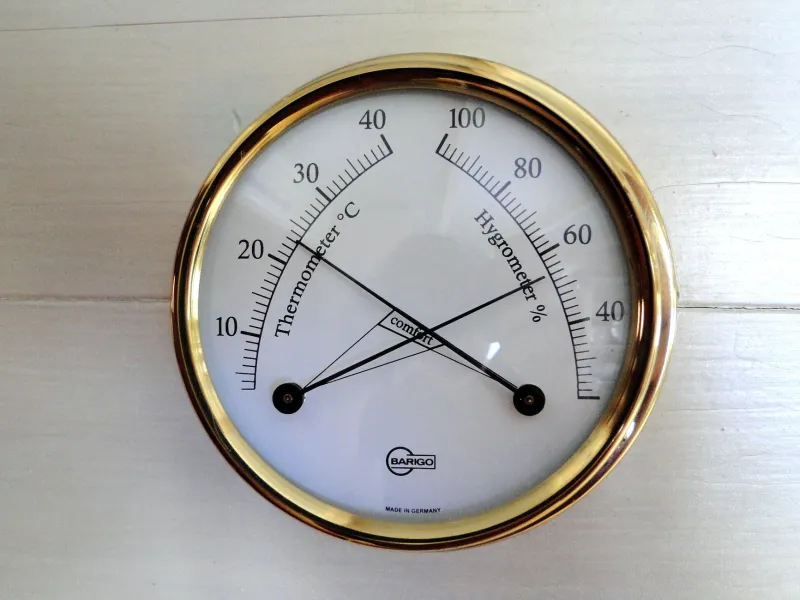
Humidistats built into whole-home HVAC systems are designed to maintain indoor relative humidity between roughly 30 and 50 percent, a range generally compatible with medication storage. However, many systems do not include active humidity control, and even those that do can struggle during shoulder seasons — early fall and late spring — when outdoor humidity is high and the system is not running long enough to dehumidify effectively. Portable hygrometers, available for under $20 at most hardware retailers, allow homeowners to measure actual humidity levels in specific storage locations rather than relying on assumptions.
Creating Optimal Storage Microclimates at Home
The goal is not to build a pharmaceutical-grade storage facility; it is to identify the most genuinely stable locations in your specific home and use them intentionally.
Audit before you organize. Spend a week placing an inexpensive digital thermometer-hygrometer in each candidate storage location. Record readings at different times of day and during different weather conditions. The data will likely surprise you.
Prioritize interior walls and interior rooms. Locations away from exterior walls, windows, vents, and mechanical systems will almost always show greater stability. A shelf in an interior hallway or an interior bedroom closet, away from shared bathroom walls, is often the most defensible option in a typical American home.
Use insulated storage containers for high-stakes medications. Insulin, certain biologics, and other temperature-sensitive drugs should be stored in small, insulated cases with temperature-indicating cards when not refrigerated. This is particularly relevant during power outages, when refrigerators may lose their controlled environment within hours.
Take seasonal changes seriously. A storage location that performs well in October may be inadequate in July. Reassess your medication storage setup as seasons change, particularly if you live in a climate with significant temperature swings.
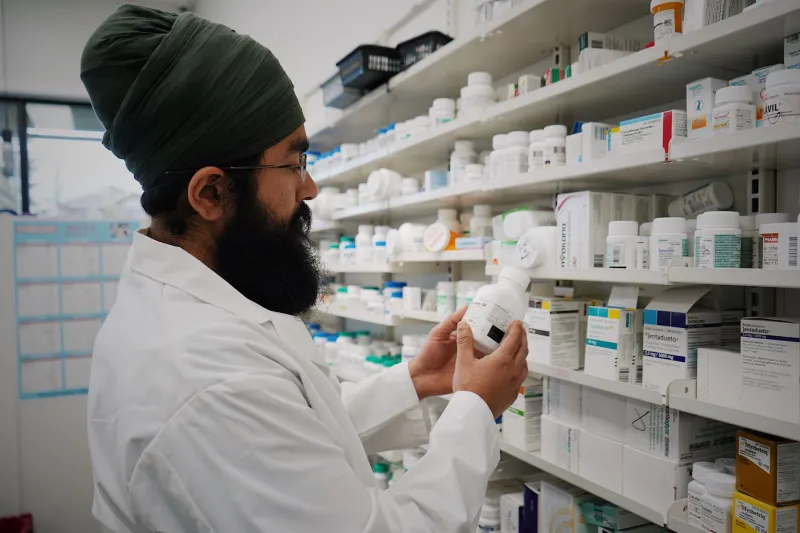
Consult your pharmacist about specific vulnerabilities. Not all medications are equally sensitive. Some are remarkably stable across a range of conditions; others begin to degrade quickly when conditions deviate from ideal. Your pharmacist can identify which of your current medications warrant the greatest storage care and flag any that require refrigeration you may not be providing.
The Practical Bottom Line
Medication efficacy is not a fixed property that remains constant from the moment of dispensing to the expiration date. It is a function of chemistry — and chemistry responds to environment. The homes most Americans live in are more climatically variable than the storage guidelines printed on prescription labels assume.
Investing a small amount of time and a modest outlay in basic monitoring tools can help ensure that the medications you rely on are actually delivering what they promise. In the context of home health management, few interventions offer a better return.